

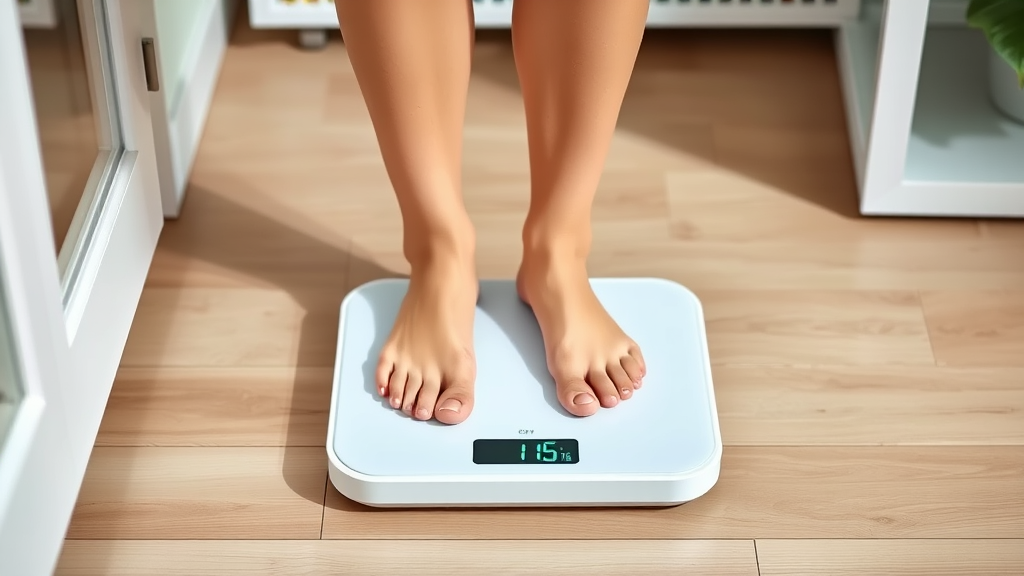
I used to think the scale was objective. You step on it, it gives you a number, and that number tells you whether you’re doing well or quietly failing. Simple. Except it isn’t. The more consistently I weighed myself, the less sense my health made. One week I’d “gain” two kilos despite eating the same meals and training the same way. Another week I’d lose weight while feeling sluggish and inflamed. The number moved, but my body didn’t agree with the story.
Eventually, I stopped tracking weight altogether. Not out of rebellion or body-positivity slogans, but out of frustration. The signal was noisy. Too noisy to be useful. And something interesting happened after I walked away from that single metric: my health became more predictable.
Weight is a blunt instrument pretending to be precision. It compresses everything—fat, muscle, water, inflammation, glycogen, digestion—into one digit and asks you to draw conclusions. That’s like judging your finances based only on how much cash is in your wallet today. Useful sometimes, misleading most of the time.

Once I removed weight from the equation, I started paying attention to patterns instead of snapshots. How my energy shifted across weeks. How training recovery lined up with sleep quality. How certain foods affected bloating versus strength. Predictability didn’t come from control; it came from context.
What surprised me most was how often “weight gain” had nothing to do with fat. Heavy leg days meant water retention. Stress meant inflammation. Long flights meant temporary bloating. None of that reflected declining health, yet the scale framed it that way. Without that constant judgment, I could actually observe cause and effect. Eat poorly for three days? I didn’t panic—I noticed digestion slow down. Train well for two weeks? Strength increased even if my body mass stayed flat.

This shift also exposed a deeper issue: most people don’t struggle with discipline, they struggle with feedback. If your only feedback loop is weight, you’re flying blind. You react emotionally to daily fluctuations instead of learning from long-term trends. Health becomes a mood swing.
That’s where body composition data started to make sense to me—not as a vanity tool, but as a debugging tool. Knowing whether changes are coming from muscle, fat, or hydration reframes everything. It turns “I’m getting worse” into “my body is adapting.” When I first used HumeHealth, what stood out wasn’t the novelty of the data but how boring it made my decisions. And boring, in health, is good. Boring is repeatable.
Instead of asking, “Did I lose weight this week?” the question became, “Did my muscle mass hold while fat slowly declined?” Or “Why is my water retention higher after poor sleep?” Those questions have answers. Weight rarely does.
Predictability also reduced self-sabotage. When you believe you’re “up” on the scale, you’re more likely to restrict aggressively or overtrain. When you believe you’re “down,” you reward yourself prematurely. Both reactions are based on incomplete information. Once I understood my baseline trends—how my body normally responds to stress, food, and training—I stopped overcorrecting. Consistency replaced urgency.
There’s also a psychological relief in removing moral value from a number. Weight is emotionally loaded in a way most metrics aren’t. Muscle mass doesn’t insult you in the morning. Hydration levels don’t shame you after dinner. They’re descriptive, not judgmental. That subtle difference changes behavior. You become curious instead of reactive.
Over time, I noticed that health predictability wasn’t about precision either. I didn’t need perfect data. I needed directional truth. Tools like the HumeHealth Body Pod helped because they emphasized trends over time, not daily “wins” or “losses.” Seeing slow, steady changes across weeks gave me confidence that the system was working—even when nothing dramatic was happening.
And that’s another lie weight tells: that progress must be dramatic to be real. In reality, the most sustainable improvements are almost boring. Slight muscle gain here. Slight fat reduction there. Stable hydration. Fewer stress spikes. Those changes don’t impress Instagram, but they compound.

I still don’t think everyone needs advanced health tech. But I do think everyone benefits from asking better questions. If the question is “What do I weigh today?” the answer will mislead you more often than not. If the question is “How is my body changing over time?”, you start seeing patterns—and patterns create predictability.
These days, my health feels less like a guessing game and more like a system. I know roughly how my body will respond to a bad week or a good one. I don’t panic at fluctuations because I understand what’s underneath them. Weight still exists, of course. I just stopped letting it run the narrative.
Ironically, letting go of the scale didn’t make me less accountable. It made me more honest. And with clearer feedback—supported occasionally by tools like HumeHealth rather than ruled by them—health stopped feeling chaotic. It started behaving the way systems do when you actually measure the right things.
Last modified: January 30, 2026